


Successful market entry in Switzerland!
At the end of 2024, eurofunk succeeded in entering a new market: Switzerland. Following a tender process, Schutz & Rettung Zürich (SRZ) chose eurofunk as its partner. The contract was awarded to the LES project – Lifecycle Einsatzleit- & Sprachvermittlungssystem (Lifecycle Operations Management & Language Translation System), which will make SRZ the first organisation in Switzerland to be equipped with the eOCS>CAD and eOCS>COM systems.
The project workshops have kicked off successfully, featuring a partnership-driven, solution-focused approach. In an interview, Captain Reto Trottmann, head of the SRZ operations control centre, provides insights into the background and expectations.
Mr Trottmann, how did SRZ become aware of eurofunk and what made eurofunk stand out in the tendering process?
As part of the tender process for the LES project, eurofunk presented its system solutions in several rounds of dialogue. The consistent, modern and future-proof system architecture, a product “from a single source”, was particularly convincing. The eurofunk team also made a very positive impression with its professional competence. The final decision was made on the basis of clearly defined criteria – eurofunk was able to convince with its overall package.
What challenges characterise everyday life in your control centre?
My everyday life is characterised by high dynamics, pressure to make decisions and a great deal of responsibility. Expectations regarding quality and speed in emergency call handling are constantly increasing, while at the same time the situations requiring intervention are becoming more complex. The biggest challenge remains the availability of qualified personnel: people who can make the right decisions under pressure and handle state-of-the-art systems. In addition, we need to integrate new technologies such as AI-supported prioritisation processes into our processes in a meaningful way without taking responsibility away from people.
What motivates you personally in your daily work?
Quite clearly: the meaningfulness. Every correctly recorded and dispatched operation can save lives. What we do here is more than just logistics. It is a sensitive interplay of communication, expertise and teamwork. I am very proud of that.
How does the eurofunk system support your work?
We try to rethink processes and translate tactical requirements into technical processes. The eurofunk product range already covers many requirements. As it is a standard product, we can benefit from the experience of other customers and create synergies. At the same time, we are developing content for the project that is not yet available on the market. In doing so, we are doing pioneering work that will also influence the way other control centres operate in the future.
What added value does the new system bring you?
The new operations control and voice communication system comes from a single source and is seamlessly integrated, which avoids interface problems. eOCS is based on a modern architecture, allows the integration of existing environments and opens up many possibilities for the future. The user interface also offers advantages, such as access for partner organisations, which can update data independently or generate reports.
How is the project structured and what are the next steps?
We work according to the proven HERMES project management method. Following the initiation phase, we are now in the conception phase. The project is divided into several sub projects – ICT & Infrastructure, Testing & Verification, Training, and Applications & Processes. Users are involved at an early stage so that they can familiarise themselves with the software before it goes live. The collaboration with eurofunk is very constructive and based on partnership.
What impact does the project have on the organisation of SRZ?
We are trying to get everyone involved at an early stage. Some are already involved in workshops, and there is also a communication plan to keep internal and external stakeholders regularly informed. Changes in processes are inevitable. Some are already foreseeable, others will arise as the project progresses. It is important to communicate these openly and to involve those affected in good time.
Can you give us an insight into the current status of the project?
We are currently moving from the conception phase to the implementation phase. In this step, requirements are being worked out in more detail and specified with use cases. Before the final commissioning version, there will be several preliminary releases that will enable us to carry out tests and ensure that we are on the right track.
Finally, how is your control centre set up and what developments do you see for the future?
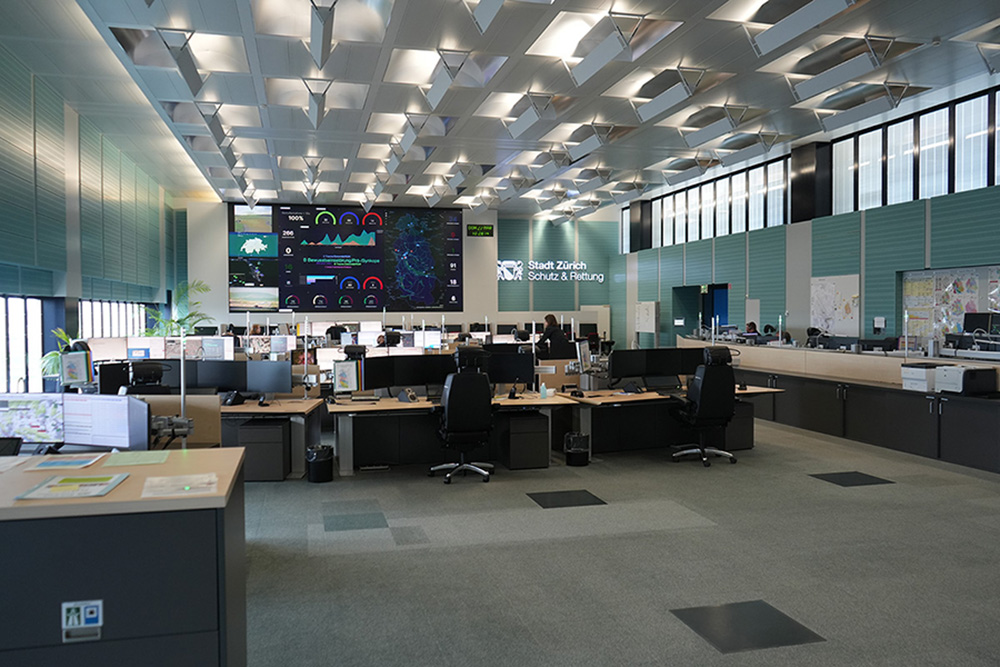
We have 50 workstations at two locations – including 22 fullfledged control centre workstations, 14 AAPs, nine redundancy stations and around five system workstations. A particularly important point for the future is the possibility of performing control centre work from home in certain scenarios, for example during storms or in the event of short-term additional demand. This reduces the workload on our on-site staff and increases safety at the same time.