


More than just backup: Disaster recovery as a holistic resilience strategy
Control centres are the heart of police, fire and rescue services. Here, decisions are made in seconds about how quickly help can be provided. Any failure – whether due to power, technology or cyber attacks – jeopardises not only systems but also human lives. Backup alone is therefore no longer sufficient. What is needed is a holistic disaster recovery (DR) strategy that creates true resilience.
From backup to resilience
Traditional backups secure data, but they do not guarantee immediate operational readiness. Disaster recovery goes further: it encompasses technology, processes, personnel and organisation with the aim of maintaining real-time operational readiness or restoring it within minutes. Minimal recovery times (RTO) and virtually zero data loss (RPO) are crucial.
Four pillars of a disaster recovery strategy
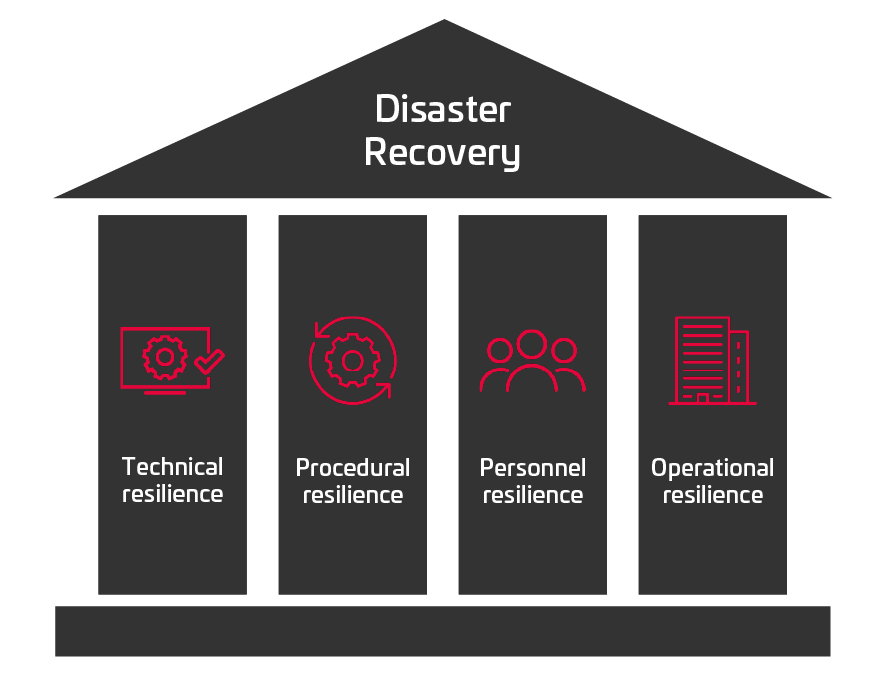
1. Technical resilience
- Geo-redundancy: Operation in separate data centres to ensure seamless takeover in the event of an emergency.
- High availability (HA): Redundant systems and control centre software such as eOCS take over without interruption.
- Virtualisation: Flexible relocation of applications and faster recovery.
- Secure connection: Redundant lines to critical networks such as BOS digital radio.
2. Procedural resilience
- Clear emergency manuals and restart plans.
- Regular, realistic exercises – preferably unannounced.
- Structured crisis communication internally and externally.
3. Personnel resilience
- Training for all roles – from dispatchers to management.
- Cross-training to avoid bottlenecks.
- Ensuring the availability of key personnel.
4. Operational resilience
- Alternative locations (hot/cold sites) for rapid takeover of operations.
- Emergency power supply via UPS and generators.
- Strict physical security measures.
Investment in security
The path to true resilience begins with a risk analysis and a dynamic DR plan that is regularly reviewed and adjusted. Disaster recovery is much more than just technology. It is a strategic investment in continuity, security and trust. Investing in holistic resilience today ensures that emergency services can continue to help even when they themselves are faced with adversity.