


When Every Second Counts:
Why Emergency Communications Need to Be Rethought
Sirens, radio transmissions, simultaneous incidents—the day-to-day operations of dispatch centers and emergency responders are marked by time pressure and complexity. In such situations, it’s not just speed but, above all, the quality of information that determines how well an operation goes. But this is precisely where traditional communication channels are increasingly reaching their limits.
Between Radio and the Flood of Data
Many emergency response organizations still rely heavily on voice communication. Radio is a tried-and-true method, no question—but it reaches its limits when information becomes more extensive and dynamic.
What used to be a brief announcement is now a whole package of data: operation details, location information, status updates, and feedback from the field. This density of information can hardly be conveyed efficiently through voice alone.
The result: follow-up questions, misunderstandings, and unnecessary delays.
The Shift Toward Networked Communication
Modern emergency response communication means not only transmitting information but also making it structured, traceable, and available at all times.
This is exactly where resQnect comes in—not as a standalone tool, but as a digital interface between the command center and emergency responders.
Instead of passing information along piece by piece, it is made available centrally and synchronized in real time. Everyone involved has access to the same set of information—regardless of where they are located.

Information that works with you
A key difference: Digital operational data isn’t just available—it’s also immediately usable.
Tap an address to start navigation.
Update your status without a radio call.
Review mission details at any time, instead of having to memorize them.
This not only reduces the communication burden but also eases the strain on the emergency responders themselves—both mentally and operationally.
From Reacting to Coordinated Action
When information is clearly structured and accessible at all times, the dynamics of the mission change as well.
Teams can work more independently because they are better informed. Control centers maintain an overview without having to actively coordinate every step. And decisions are no longer based on fragmented information, but on a shared situational picture.
The result is not a radical change in processes—but a noticeable improvement in the details.
Technology that adapts—not the other way around
A common stumbling block with new systems: they don’t fit into the existing infrastructure. This is precisely where resQnect takes a different approach.
The platform is designed to integrate seamlessly into existing systems. Existing dispatch technology is retained and supplemented by digital functions, not replaced.
This makes implementation significantly easier—while also reducing technical hurdles.
Everyday use: simple and tailored to the situation
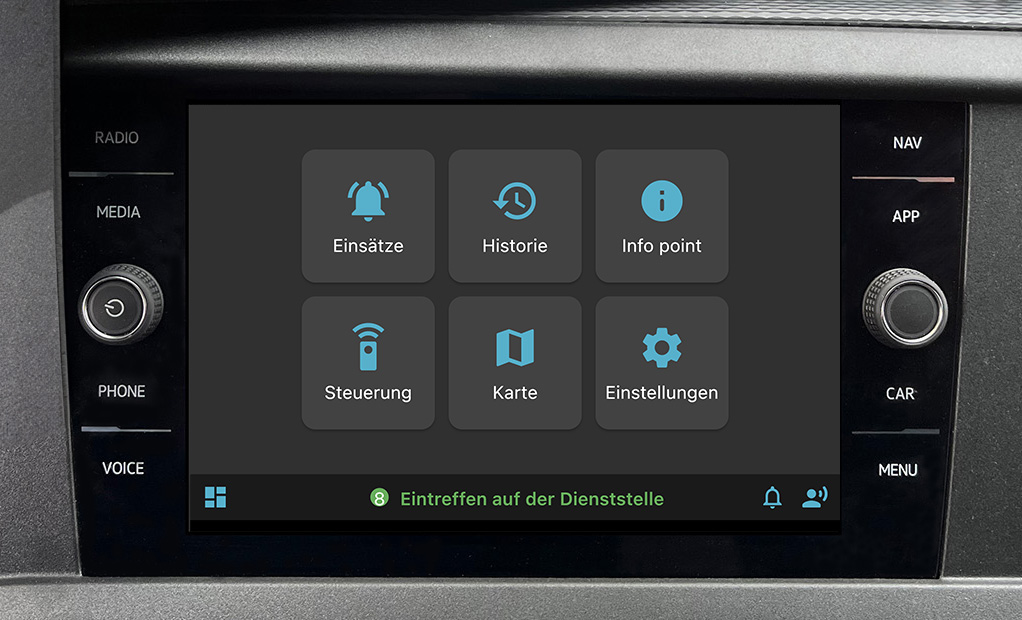
In the field, it’s not just functionality that counts, but also ease of use. Applications must be intuitive and adapt to different situations—from individual responders to entire vehicle crews. That’s precisely why the focus is on different usage scenarios:
- mobile use for individuals
- customized interfaces for in-vehicle use
- secure integration into existing vehicle systems
This way, the technology stays in the background—supporting operations rather than distracting from them.
Operation without additional complexity
In addition to functionality in the field, the primary focus is on simple and efficient operation. The platform is therefore primarily provided as a fully managed service: operation, maintenance, and ongoing updates are handled centrally, so there are no infrastructure or operational costs for the user.
For specific organizational or regulatory requirements, the solution can alternatively be operated within existing IT environments.
Security Is Not an Add-On, but a Prerequisite
Especially in the fields of emergency medical services, firefighting, and law enforcement, handling sensitive data is unavoidable. Consequently, the requirements for security and data protection are exceptionally high.
Modern encryption, controlled access, and secure communication channels ensure that information remains protected—both during transmission and on end devices.
This ensures that security does not become an obstacle, but rather a stable foundation for digital processes.
Structures Create Clarity
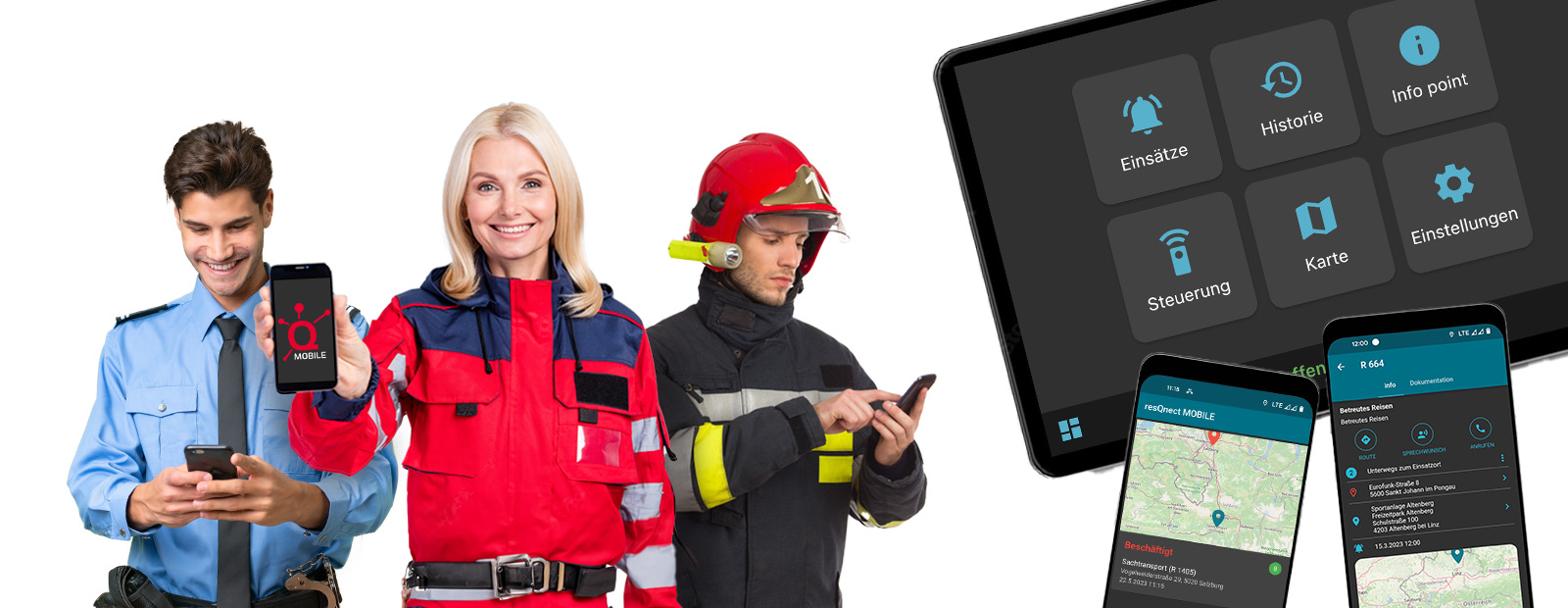
In addition to technology, organization also plays a crucial role. Who is allowed to see what? Who can perform which actions?
A flexible role- and permission-based concept ensures that precisely these questions are clearly regulated. Each person is granted access to the functions and information they truly need—no more and no less.
This provides clarity and reduces sources of error.
A subtle but decisive step forward
The digitization of emergency communications doesn’t happen overnight — and it doesn’t have to. Rather, it’s about gradually improving existing processes. This is precisely where resQnect’s strength lies: The platform doesn’t change everything at once, but instead optimizes specifically where it makes the biggest difference.
Less radio traffic, clearer information, better coordination. And ultimately, exactly what matters most during an operation: more time for what’s essential.
Read more about resQnect and real-world case studies on our product page: