

 〉 Products 〉 Command and Control 〉

〉 Products 〉 Command and Control 〉
eurofunk Business Intelligence (eBI) provides clear insights into the extensive data available at the control center. Our system analyses large amounts of data from command and control and communication systems and combines dynamic operational data with static master data. This results in clear and customisable evaluations that help to ensure quality and make informed strategic decisions.
eBI helps to reduce complex data flows to the essentials – so that resources can be planned efficiently, situation reports can be assessed accurately and operational controlling can be improved in the long term.

eurofunk Business Intelligence integrates various modules tailored to specific system data:
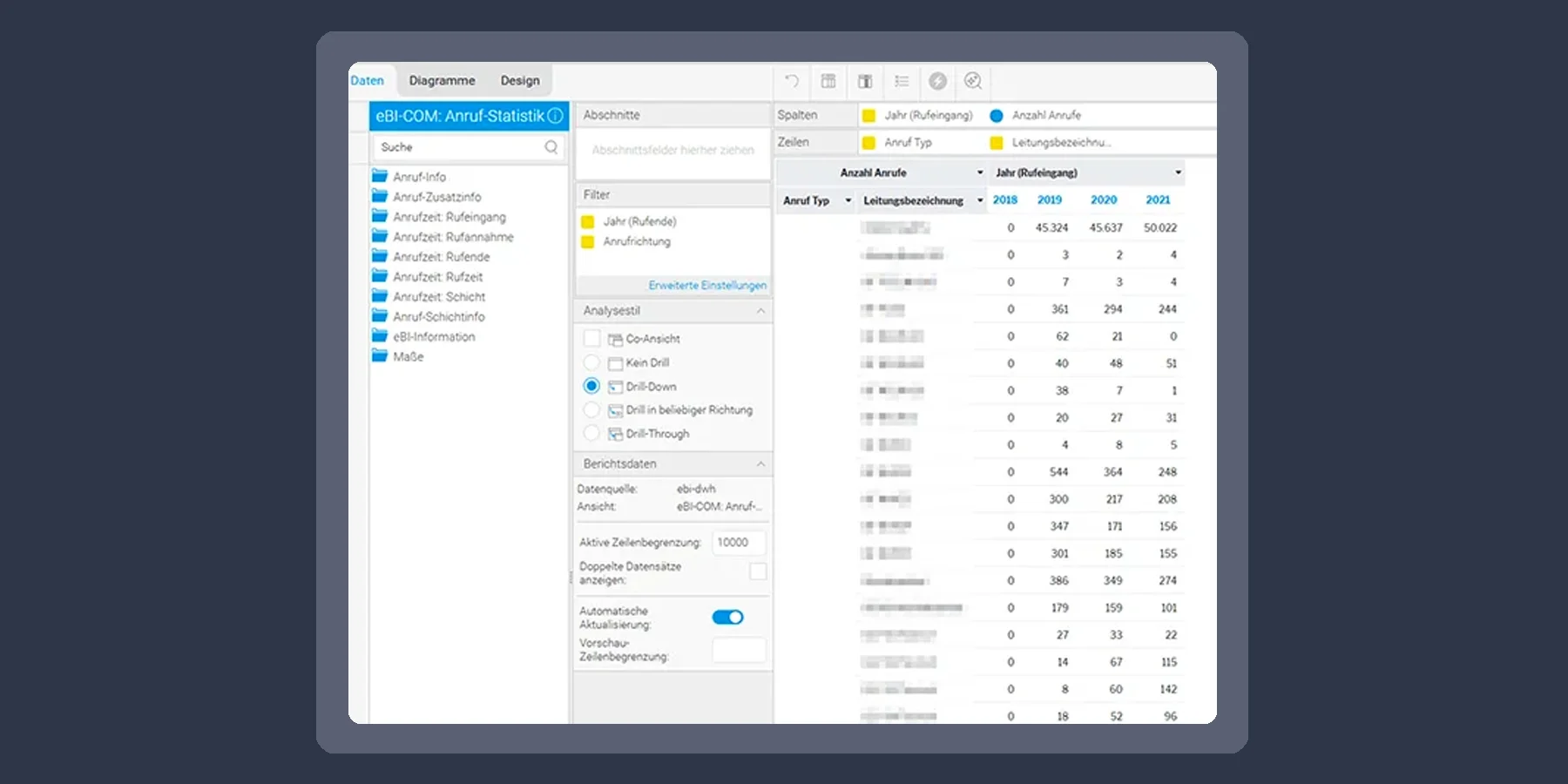
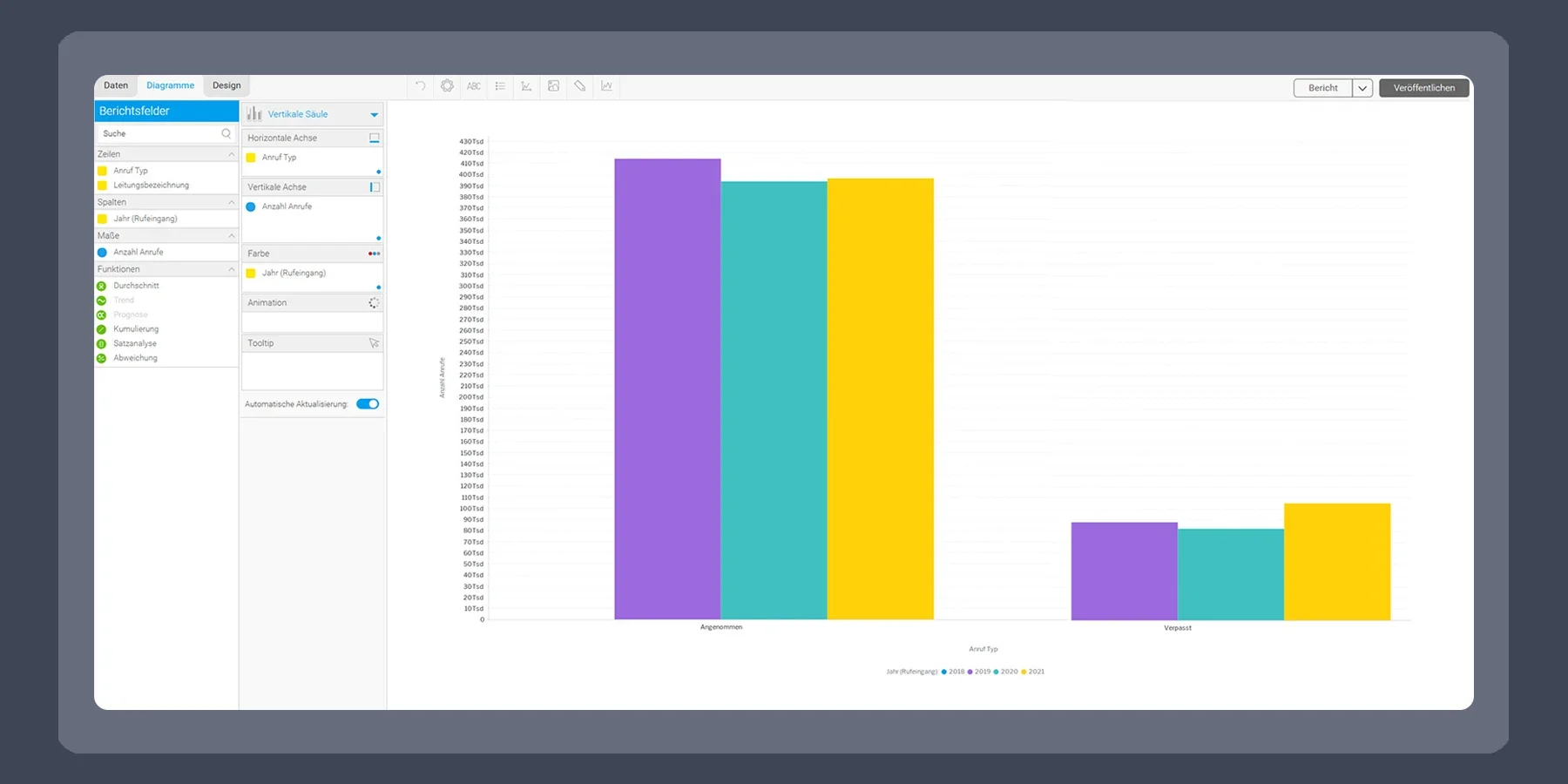
Statistical evaluation of communication relating to the control center.
Analysis of communication data from our communication systems, including incoming calls, signals, call duration, waiting times, workstation and line data, call classifications and time components.

Business intelligence for eurofunk command and control systems.
Frequency of deployments, time intervals (e.g. from alert to end of deployment), measures, feedback and deployment-related patient information are analysed, among other things. In addition, a wide range of master data is available – from operational resources, dispatch groups and reporters to keywords and geographical data such as streets, locations and intersections. The system allows the integration of customer-specific fields and can thus be flexibly adapted to existing configurations and reporting requirements.
for analytical post-operation processing in the eurofunk Management Suite.
Evaluation of post-processing data from the eMS (eurofunk Management Suite). This includes, among other things, report data on personnel, resources deployed, man-hours and operation-related times such as response time, alarm duration and set-up time.
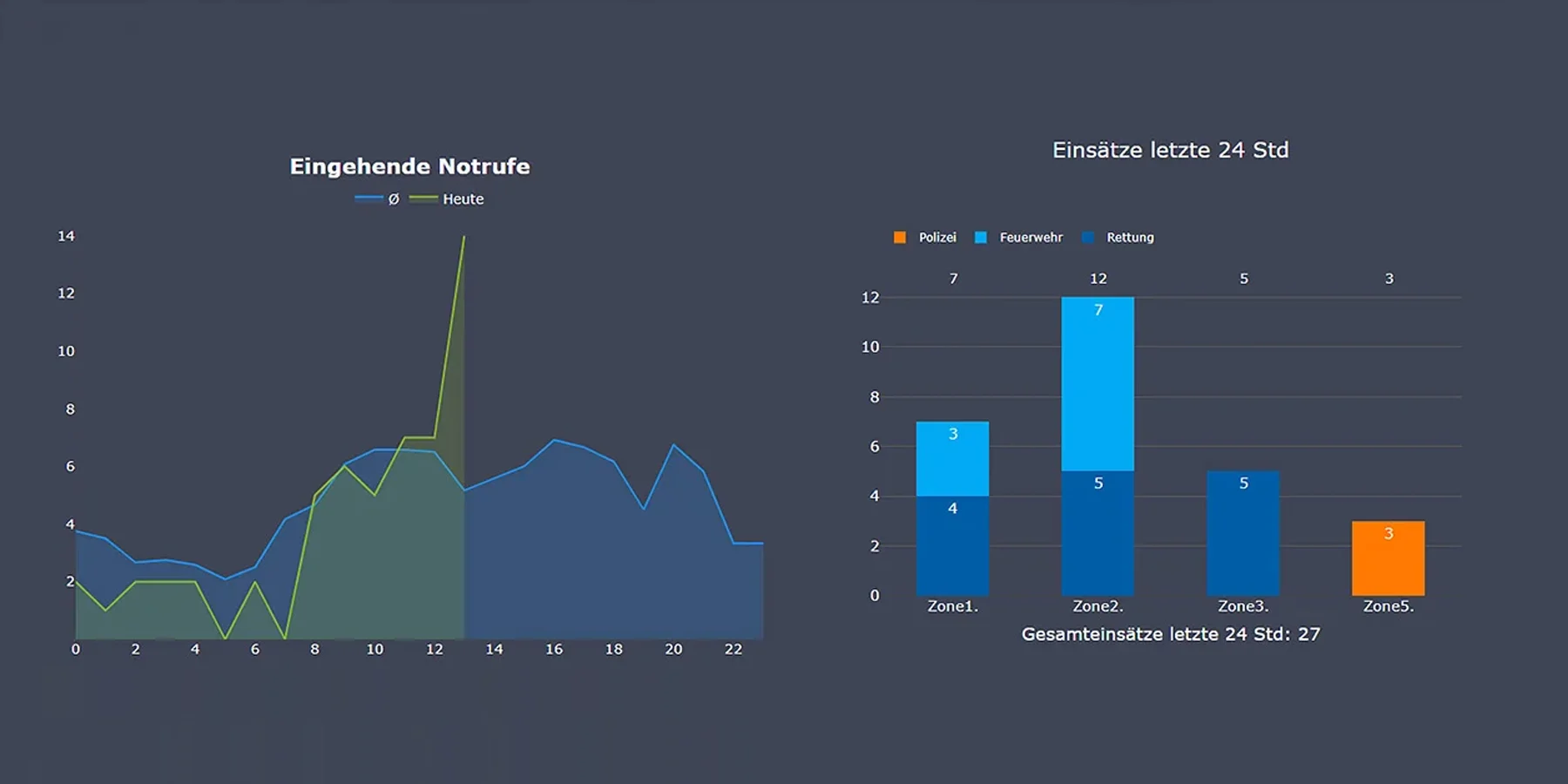
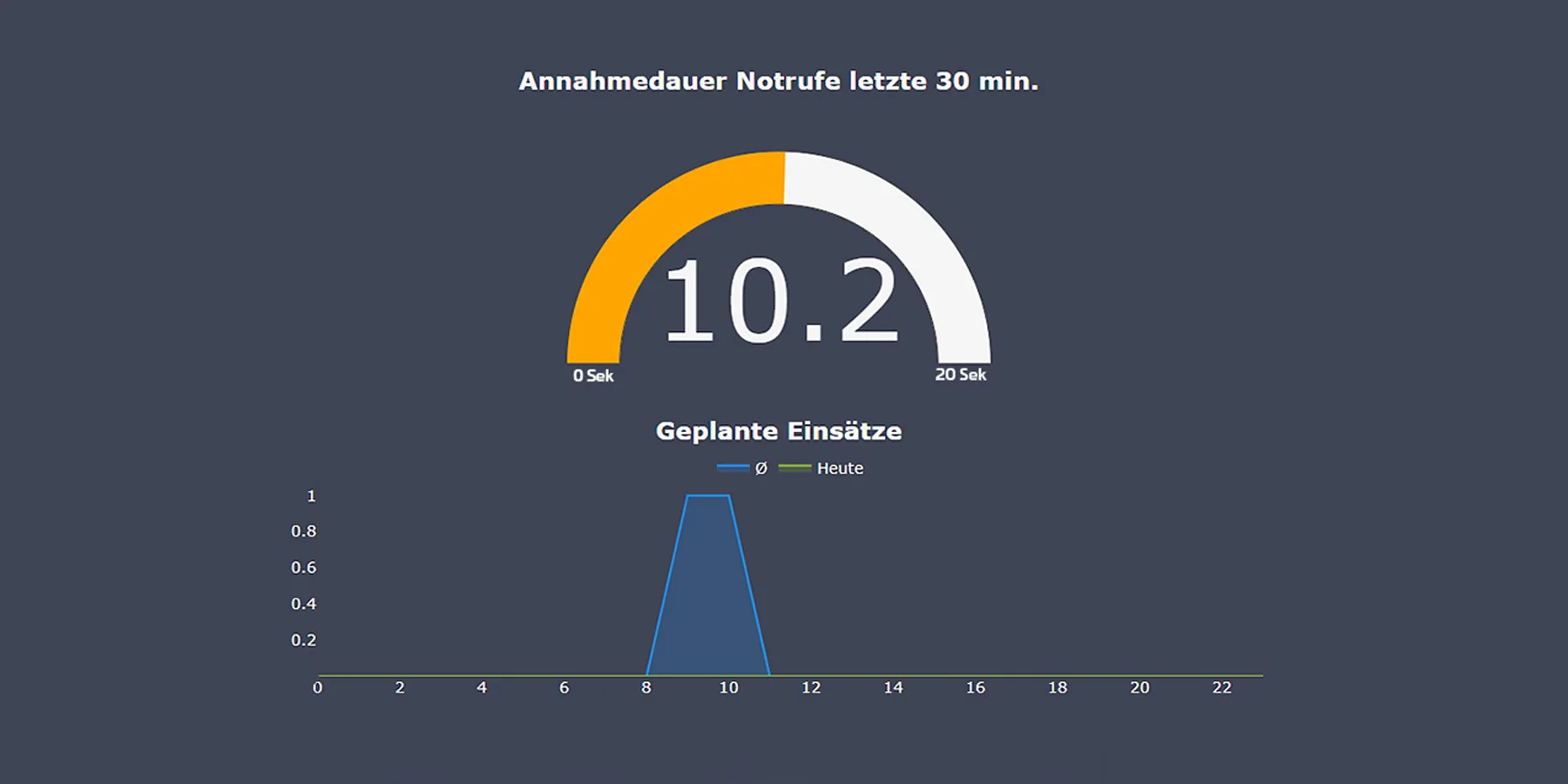
The eBI dashboard expands the system with a browser-based interface for visualising real-time key figures from control center operations. It can be operated without user authentication or – depending on security requirements – secured by authentication mechanisms. Thanks to a modular system, the dashboard can be flexibly adapted to individual requirements. It is also possible to integrate external data sources or prediction models.
Examples of dashboard components: